

What is polycythemia vera (PV)?
Polycythemia vera (pol-e-sy-THEE-me-uh VEER-uh), or PV, is a rare and chronic blood cancer. It’s part of a group of blood cancers called myeloproliferative neoplasms (my-e-lo-pro-lif-er-a-tive neo-plasms), or MPNs.
Stem cells in the bone marrow make all the blood cells in your body: red blood cells, white blood cells, and platelets. Your body needs a certain amount of each of these. Normally, your body keeps everything in balance.
PV occurs when a single stem cell in the bone marrow develops a mutation (or DNA change) and starts to make too many blood cells. This DNA change often happens in a gene called JAK2, which helps make a protein that controls how blood cells grow and divide. Most people with PV have a JAK2 mutation.
It all starts in the bone marrow
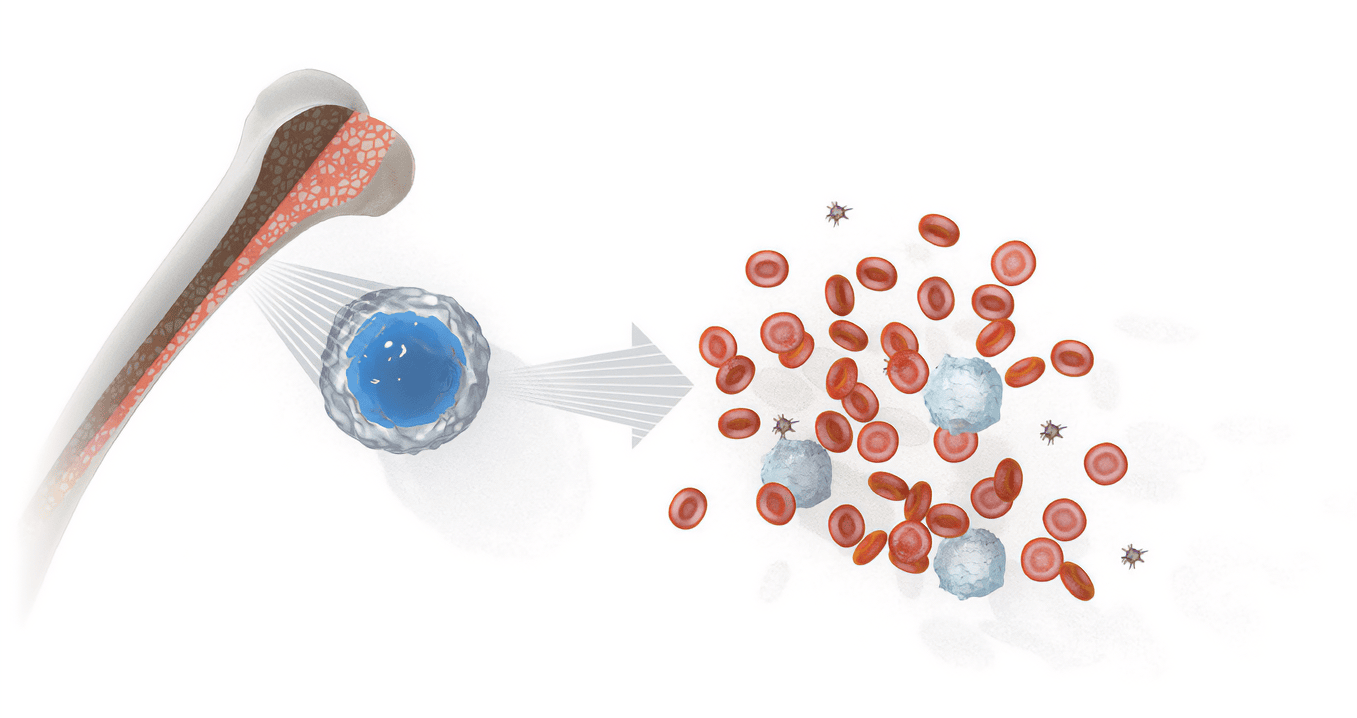
Normal
Stem Cell
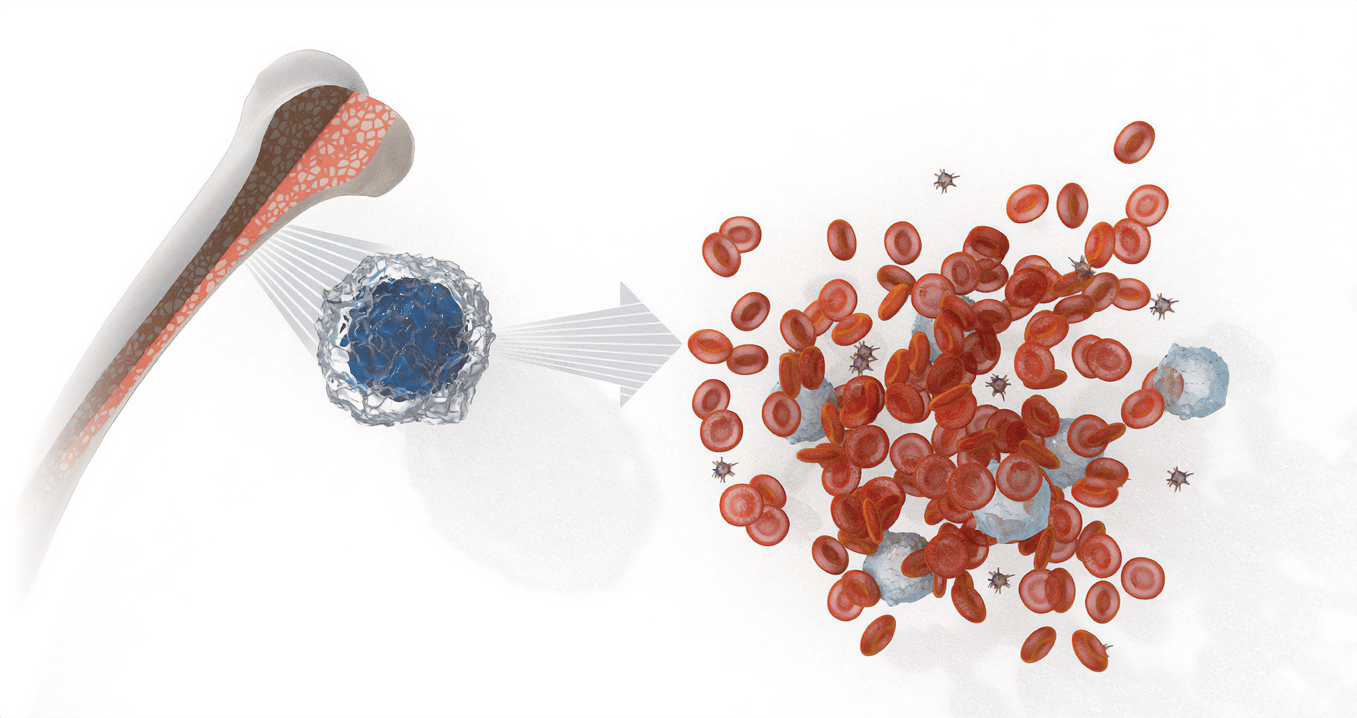
Mutated
Stem Cell

Platelet

White Blood Cell
Red Blood Cell
The JAK2 mutation can cause the bone marrow to make too many red blood cells, white blood cells, and platelets. The excess of blood cells can cause symptoms and complications of PV. Having too many red blood cells makes the blood thicker, which slows down its flow. Too many platelets can lead to the formation of blood clots. That’s when serious health problems, like heart attack, stroke, or blood clots in your abdomen, arms, legs, and/or lungs, may occur. Your doctor may refer to these as “thrombotic events”.
White blood cells also matter in PV. Although white blood cells normally help the body fight infection, higher white blood cell counts have been linked with an increased risk of thrombotic events in people with PV. This is one reason your doctor may monitor your blood counts regularly, including red blood cells, white blood cells, and platelets.
Your doctor may also talk about “JAK2 allele burden”. This refers to the proportion of blood-forming cells with the JAK2 mutation. Emerging research suggests that a higher JAK2 allele burden may be associated with worse outcomes in PV, including blood clots and progression to myelofibrosis. Research is also exploring whether reducing the number of cells carrying the JAK2 mutation may be linked with better long-term outcomes
Did you know?
What causes it:
In the majority of PV cases, a change in a gene called JAK2 is responsible for the disease.
Approximately 95% of patients have a specific point mutation (called JAK2 V617F), which tells the body to make extra blood cells.
Who gets it:
While PV can affect anyone, it is more commonly diagnosed in men and adults aged 60 years or older.
Main risks:
Managing your blood counts helps lower the risk of complications, such as blood clots (in the legs, lungs, or abdomen), heart attacks, or strokes.
Long-term outlook:
While there is a small chance the disease can progress
to myelofibrosis or leukemia over time, staying on top of your treatment plan can help support your long-term health.
PV symptoms are different for everyone
Some common PV symptoms are listed below. People living with PV may experience none or any combination of these symptoms. Some symptoms might be easy to ignore or attribute to something else—but it’s important to tell your healthcare team about them so you get the care you need.

Itchy skin (especially after a warm bath or shower)

Numbness in the hands, feet, arms, or legs (might also be described as tingling, burning, or weakness)

Bloating or abdominal pain (a feeling of fullness soon after eating or pain especially in your upper left abdomen)

Unusual bleeding (nosebleeds, bleeding gums)

Painful swelling of one joint (often the big toe)

Shortness of breath or difficulty breathing when lying down

Headache

Dizziness

Fatigue (needing to nap during the day, or not having the energy to do things you usually do)

Night sweats (severe, drenching sweating episodes during sleep that soak clothes and bedding)

Blurred vision

Bone pain (severe ache or discomfort)
How is PV managed?
Everyone’s experience with PV is unique. Your healthcare team looks at your overall health, symptoms, and individual medical profile when developing your treatment plan.
The goals of treatment are to:
- Help manage symptoms and support your daily energy levels
- Reduce risk of thrombotic events and bleeding by working towards keeping your blood cell counts within a healthy, normal range
- Slow down or prevent disease progression
Common approaches to treatment
Your treatment plan is based on your age, overall health, symptoms, and individual medical profile. Your healthcare team will continue to partner with you to monitor your condition and manage your long-term treatment approach. Below are common treatment options your doctor may have discussed with you before prescribing BESREMI®.
Phlebotomy (blood removal)
A procedure that removes blood from the body.
Helps reduce the excess number of red blood cells and make the blood less thick.
Often used early in treatment and may be continued over time.
Low-dose aspirin
May be used to reduce the risk of blood clots.
Works by helping prevent platelets from forming clots.
Drug therapies
Medications may be used to help control blood cell production, particularly for patients at higher risk of complications.
Treatments like ropeginterferon alfa-2b, hydroxyurea, and ruxolitinib each use a different approach to help your body lower and maintain healthy blood counts.
Supportive care
Additional treatments may be used to help manage symptoms or complications, such as:
- Medications to reduce itching
- Treatments to manage uric acid levels (to help prevent gout)
Ongoing care and monitoring
Regular follow-up is an important part of managing PV. Your healthcare provider will:
- Monitor your blood counts
- Assess symptoms
- Adjust your treatment as needed
Why BESREMI®?
How BESREMI® works
BESREMI® (ropeginterferon alfa-2b) is a type of medicine called an interferon.
BESREMI® gets to the source
of polycythemia vera by targeting the bone marrow
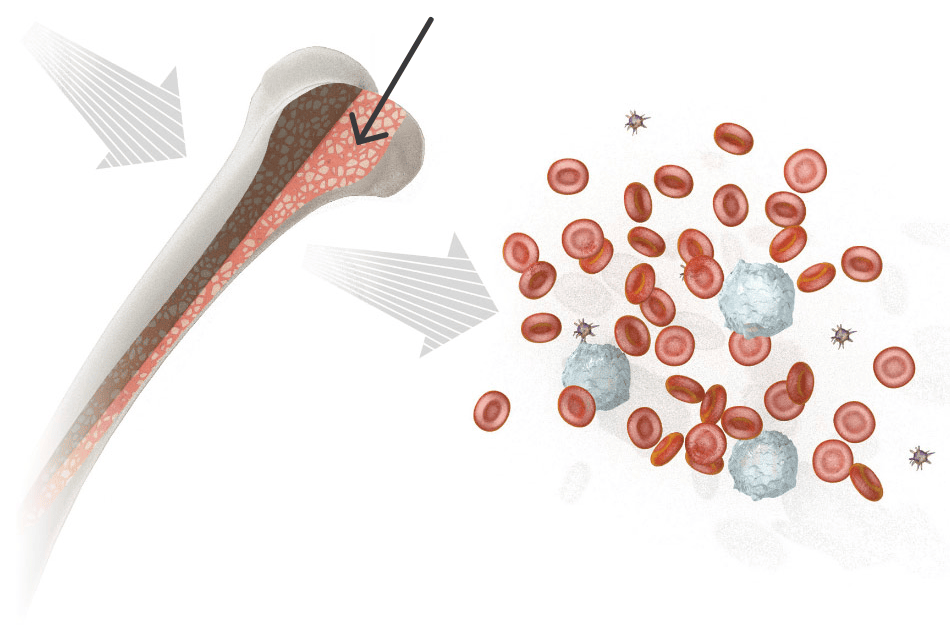
Platelet
White Blood Cell
Red Blood Cell
BESREMI® slows down or stops the abnormal growth of blood cells.